Application Notes
Press Brake Sheet Follower: Why Long Plates Need Support
On long or heavy plates someone holds and follows the sheet through the bend. A sheet follower with its own sensor supports the plate — no brake modification.
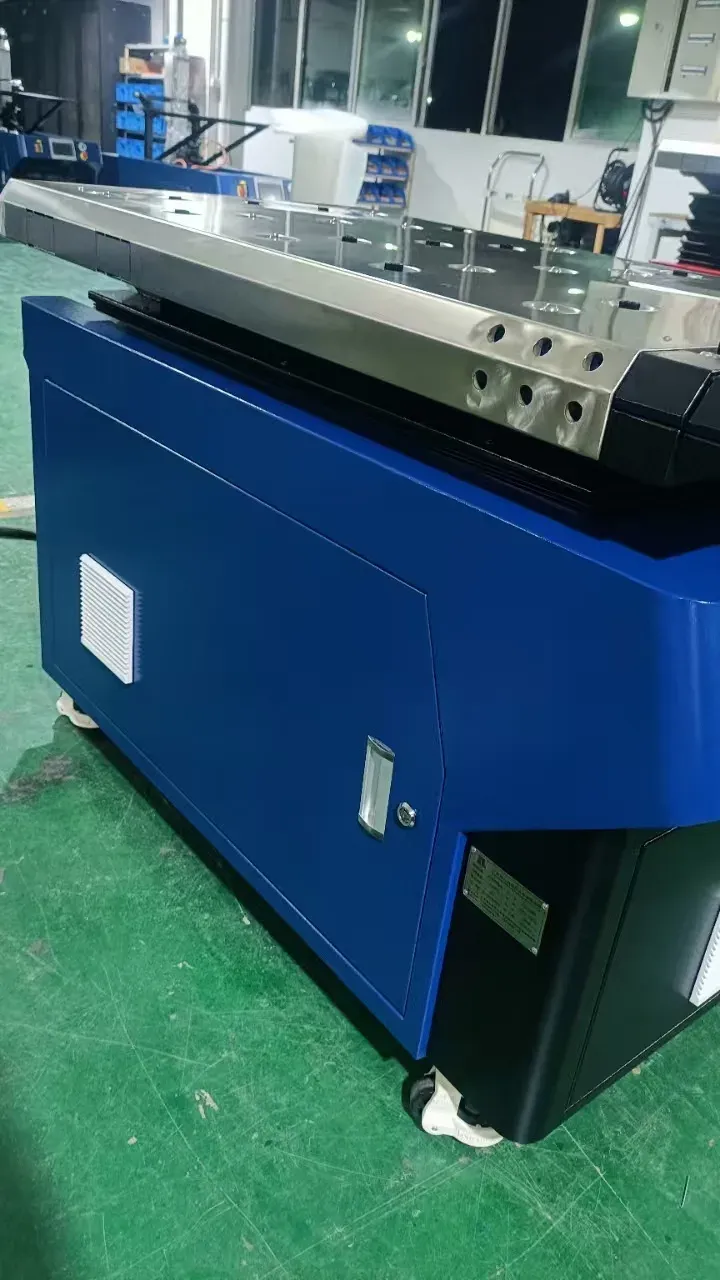
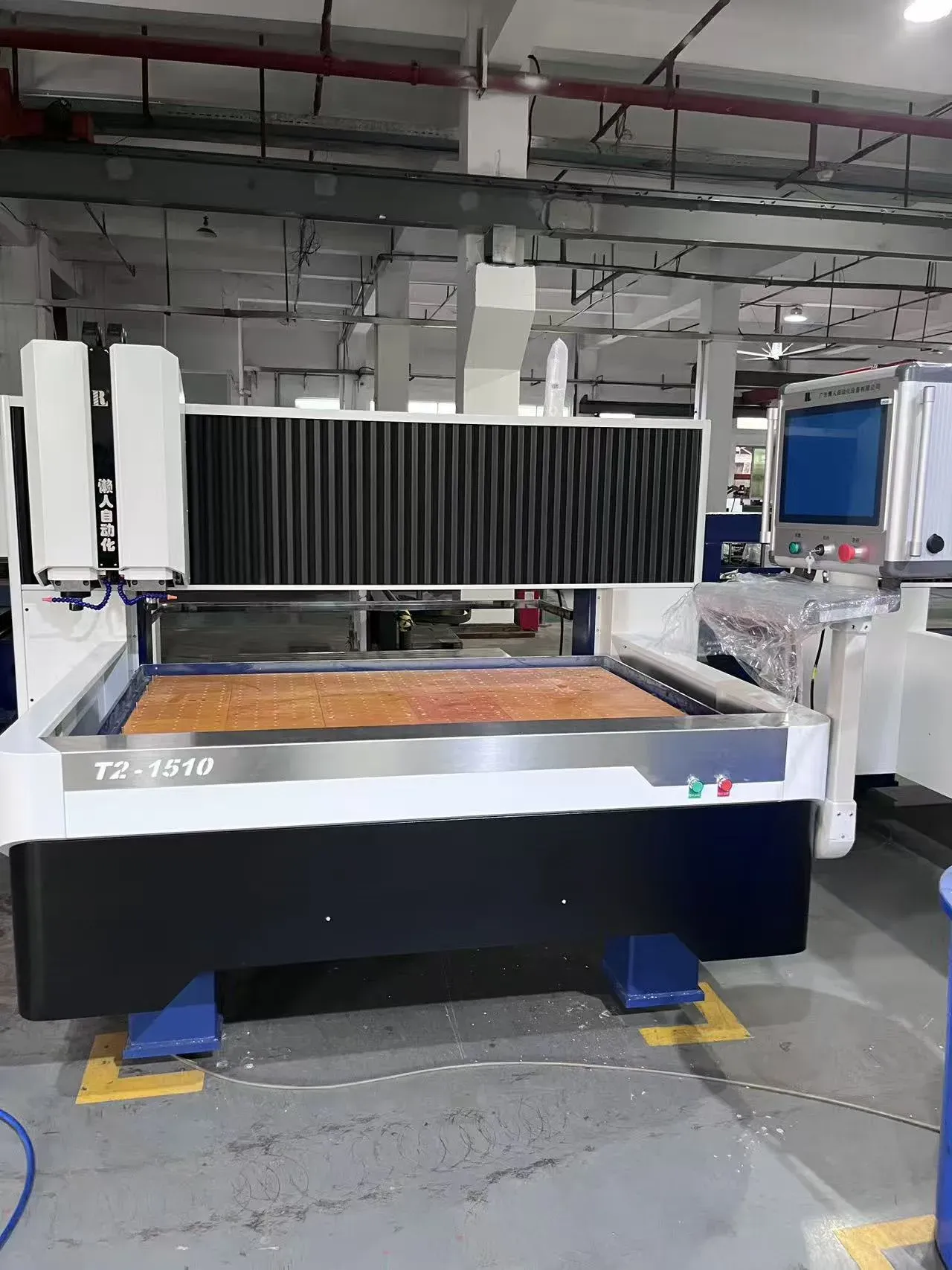
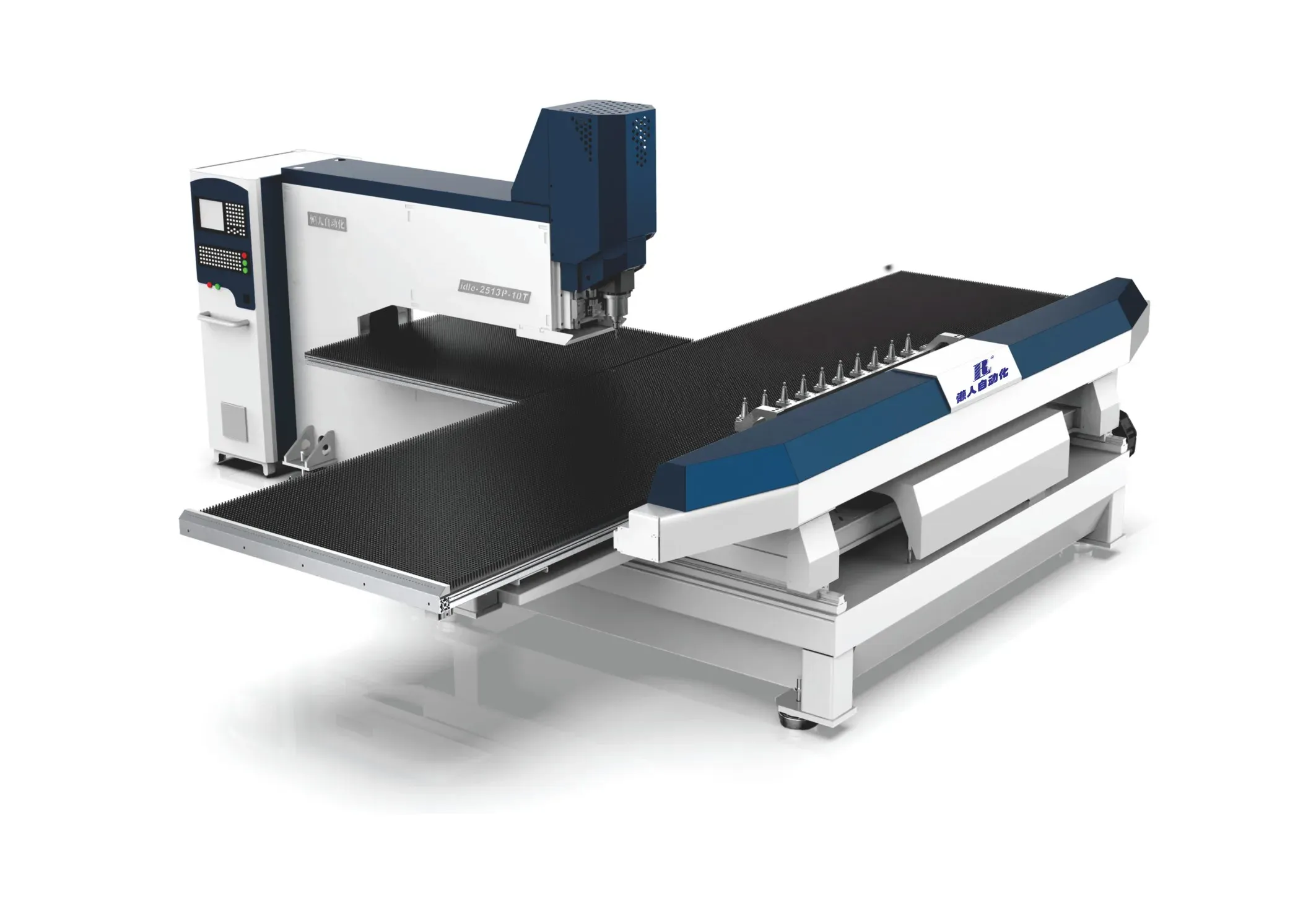
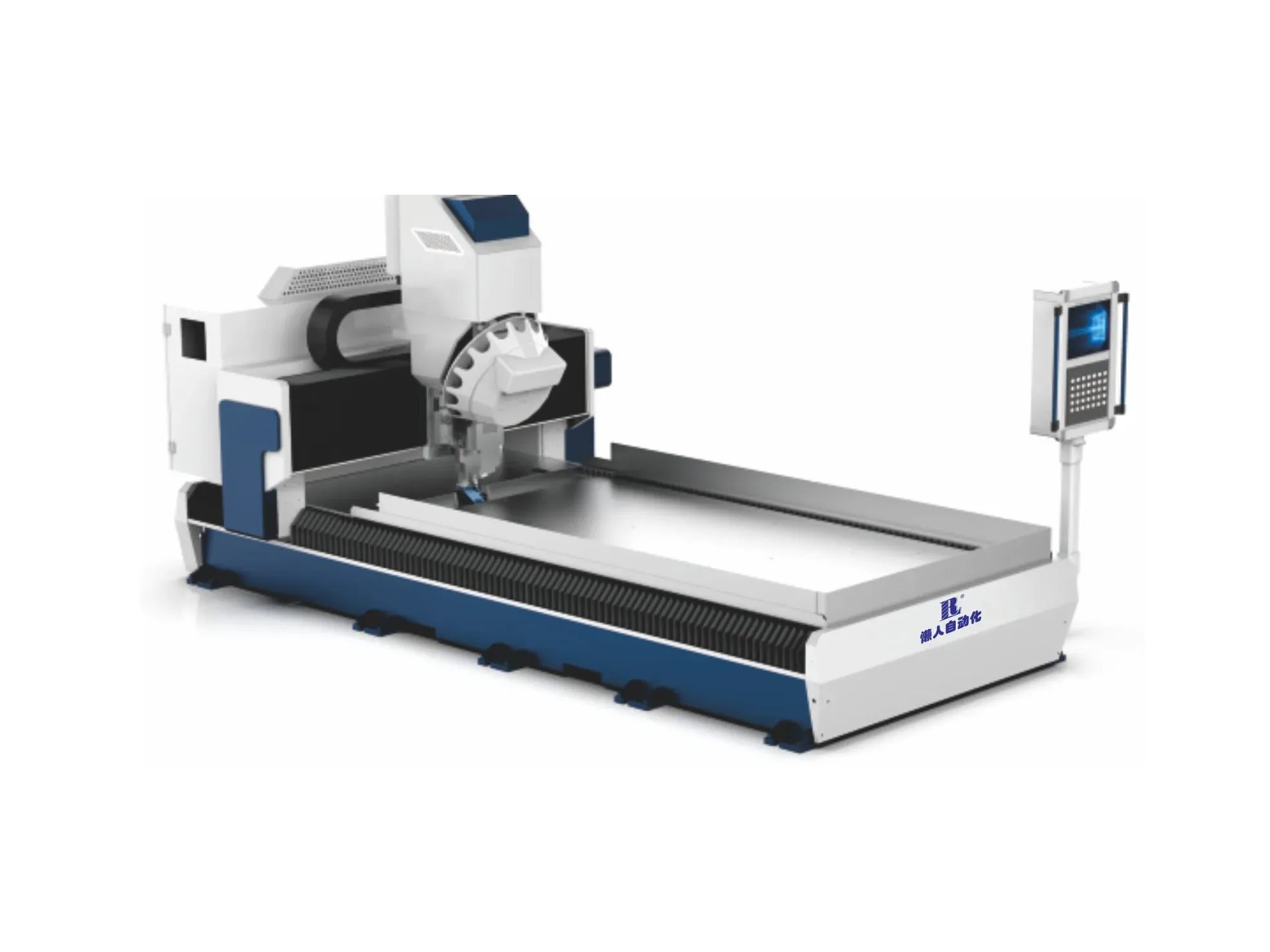
The oldest bending aid is a second operator. On every long or heavy part, one person runs the press brake and another stands at the far end of the sheet, holding it level and following the bend. That helper decides, second by second, how level the plate is — which is why results vary with the shift and why backs and wrists pay for it. A sheet follower (bending follow-up support) takes over that job with a powered table that carries the plate and moves with it through the bend.
The short answer
• Support instead of holding: the follower's table carries the sheet weight and stays synchronized with the bending action, so the plate is supported through the stroke rather than held by a person.
• No press brake modification: the unit runs its own control system and its own displacement sensor, so linkage to the brake is achieved without touching the brake's electrical or control side.
• One unit, several brakes: it matches all brands and models of press brakes, and on a mobile base one follower can be shared between machines.
What changes on the floor is labor, safety and consistency: one operator bends parts that used to need two, plates stop sagging at the far end, and the repetitive-lifting injury exposure that comes with manual following is reduced.
What manual following costs
Holding a long plate by hand through a bend creates three costs that shops usually accept as normal:
• Deformation and marks. A held plate droops or is lifted at slightly the wrong height, so the sheet is bent while it is already stressed — flatness and angle suffer, and a slipped grip leaves a mark.
• Injury exposure. Supporting heavy sheets through hundreds of cycles is exactly the repetitive, awkward lifting that bending departments report as injuries.
• A second operator. Every long part ties up a person whose only function is to be a spring — labor that a powered support table does without fatigue.
How an independent sheet follower works
The unit is built around an independent control system with its own displacement sensor (a standard component, not an option). The sensor reads the bending machine's motion, and the follower's control matches the table movement to it — linkage by measurement, not by wiring into the brake. No modification of the press brake is needed.
Setup against a given brake is handled in the controller: the table height and installation distance parameters adjust to match the host machine, and each model carries its own automatic height adjustment range on top of its minimum table height.
The support surface itself protects the part: the table combines ball-transfer and brush support, so a sheet slides onto the table without scratching and rides on rolling contact through the cycle. The extension rod carries a support brush plate of its own, and the whole unit stands on a mobile caster base for moving between brakes. Operation is from buttons and a touch screen on the unit.
Synchronized through the bend
The core of the idea is synchronization: the follower's table moves with the sheet as the bend forms, staying level with the plate instead of fighting it. That is what removes the manual-holding deformation — the sheet is never bent while being held at the wrong angle, because the support follows the geometry of the bend rather than a fixed position.
For shops doing box pans and deep profiles, the follower can also work with a double-fold compound die setup, supporting the sheet through the compound bend sequence.
One unit, any press brake
Because linkage comes from the follower's own sensor, the unit is not tied to one control brand: it suits all brands and models of press brakes, and one follower can serve multiple bending machines — rolled to whichever brake is running long parts that day.
Three options extend the range: two-machine linkage for extra-long sheets spanning two followers, suction or magnet holding for sheets that slide on a ball table, and a 2000 mm width extension for wide panels.
Nine models: choosing by weight, angle and length
The range is easiest to read as five families. Within each EH family, the "90" variant follows bends down to 90° minimum angle and the "30" variant follows down to 30° — the choice for deep bends and box work.
F890 — the compact entry: 80 kg lift, 90° minimum angle, 970 mm table with 2300 mm extension, 700 mm table width, minimum table height 950 mm, 73 mm height adjustment, 270 mm front wall avoidance, 4 kW.
EH1090 / EH1030 — 100 kg lift; EH2090 / EH2030 — 200 kg; EH3090 / EH3030 — 300 kg; EH5090 / EH5030 — 500 kg. All EH models share a 1280 mm table with 3200 mm extension.
Dimensions that change by family — table width is 700 mm through the EH30 family and 780 mm on the EH50 pair. Across the EH10 to EH50 families, minimum table height is 870 mm on 90° variants and 1050 mm on 30° variants (EH50: 900 / 1080 mm); height auto-adjustment is 150 mm on 90° variants and 80 mm on 30° variants; front wall avoidance is 240 mm on 90° variants and 190 mm on 30° variants. The F890 sits outside these patterns — its figures are listed above.
Total power — 4 kW on F890 and the EH10 pair, 6 kW on EH20, 8 kW on EH30, 10 kW on EH50.
Selection comes down to three questions: the heaviest plate you will support (80 to 500 kg), the sharpest bend you will follow (90° or 30°), and the length of sheet overhanging the brake (table plus extension). Then check the mounting window: the follower's minimum table height and front wall avoidance must clear your brake's table and frame.
When a sheet follower is not the answer
• Small, light parts: if plates are stiff enough to self-support through the bend, powered following adds cost without adding quality.
• A brake outside the mounting window: the follower's minimum table height and avoidance dimensions are fixed per model; a brake whose table or frame falls outside them needs a different arrangement.
• Expecting more than support: a follower carries and follows the sheet; it does not replace tooling, does not square the blank and does not bend. Those remain the brake's job.
FAQ
Will it fit my press brake? The follower matches all brands and models. What needs checking is geometry, not control: your brake's table height and frame against the follower's minimum table height and front wall avoidance figures.
Does it modify the press brake? No. The unit has its own control system and its own displacement sensor, so linkage is achieved by sensing the brake's motion — nothing is wired into or changed on the brake.
How heavy a sheet can it support? Depending on the model, rated lift weight runs from 80 kg on the F890 to 500 kg on the EH5090 and EH5030.
Can it follow bends sharper than 90°? Yes — within each EH family the "30" variants follow bends down to a 30° minimum angle, which covers box pans and deep profiles.
Can two followers work together? Yes, two-machine linkage is available as an option for extra-long sheets, and suction or magnet holding is available for sheets that tend to slide.
What keeps the sheet from sliding on the table? The support surface mixes ball transfers with brush support, which provides gentle friction so the sheet does not skid, without marking; for slick or finished surfaces, the optional suction or magnet holding adds positive grip.
What to send for a recommendation
Send the maximum plate size and weight, the minimum bend angle you run, and your press brake's make, model and table height. Our team will confirm which follower family fits — F890 through EH50 — and whether the 90° or 30° variant, width extension or holding options belong in the configuration.