Application Notes
Counterbore and Tapping on Stamped Parts: The ZM Series
Stamped and formed parts are hard to clamp and manual tapping drifts. The ZM series holds shaped panels flat and runs counterbore and tapping under CNC.
A flat sheet is easy to clamp. A stamped part is not: it arrives with flanges, embossed bumps, sinks and cut-outs, and every feature that makes the part useful also makes it harder to hold flat for machining. Counterbore and tapping on stamped and formed parts is still often done by hand at many shops — and hand work on shaped panels drifts in depth and position from one part to the next. This note explains how the ZM series approaches the problem, what the machine does, and how to check whether it fits your parts.
The short answer
• Positioning: origin positioning blocks give the part a repeatable datum, so loading a shaped panel becomes a set-and-go operation instead of a fitting exercise.
• Support: a floating support structure follows the underside of the formed part, holding shaped areas steady instead of resting on the few points a flat fixture can reach.
• Control: a five-axis CNC system runs counterbore and tapping in one setup, with online or offline programming in standard G-code.
Doing both hole operations in one setup removes the transfer between a drilling station and a tapping station — and removes the human variation that comes with it.
Why stamped and formed parts are difficult
Three problems show up on nearly every shaped-part job:
• The outline is irregular. A flat table or a vise built for rectangles contacts a formed part on only a few points, so the part rocks or shifts when the spindle pushes.
• Formed areas deflect. Clamping force applied to a bump or a sink can flex the panel, and a hole machined on a flexed panel is in the wrong place when the panel springs back.
• Hole types are mixed. One part can combine counterbores for socket-head screws with tapped mounting holes, which on manual equipment means at least two stations and two handling steps.
The result is familiar: counterbores at slightly different depths, tapped holes with inconsistent starts, and a first-article inspection that never quite matches the tenth part.
How the ZM series handles it
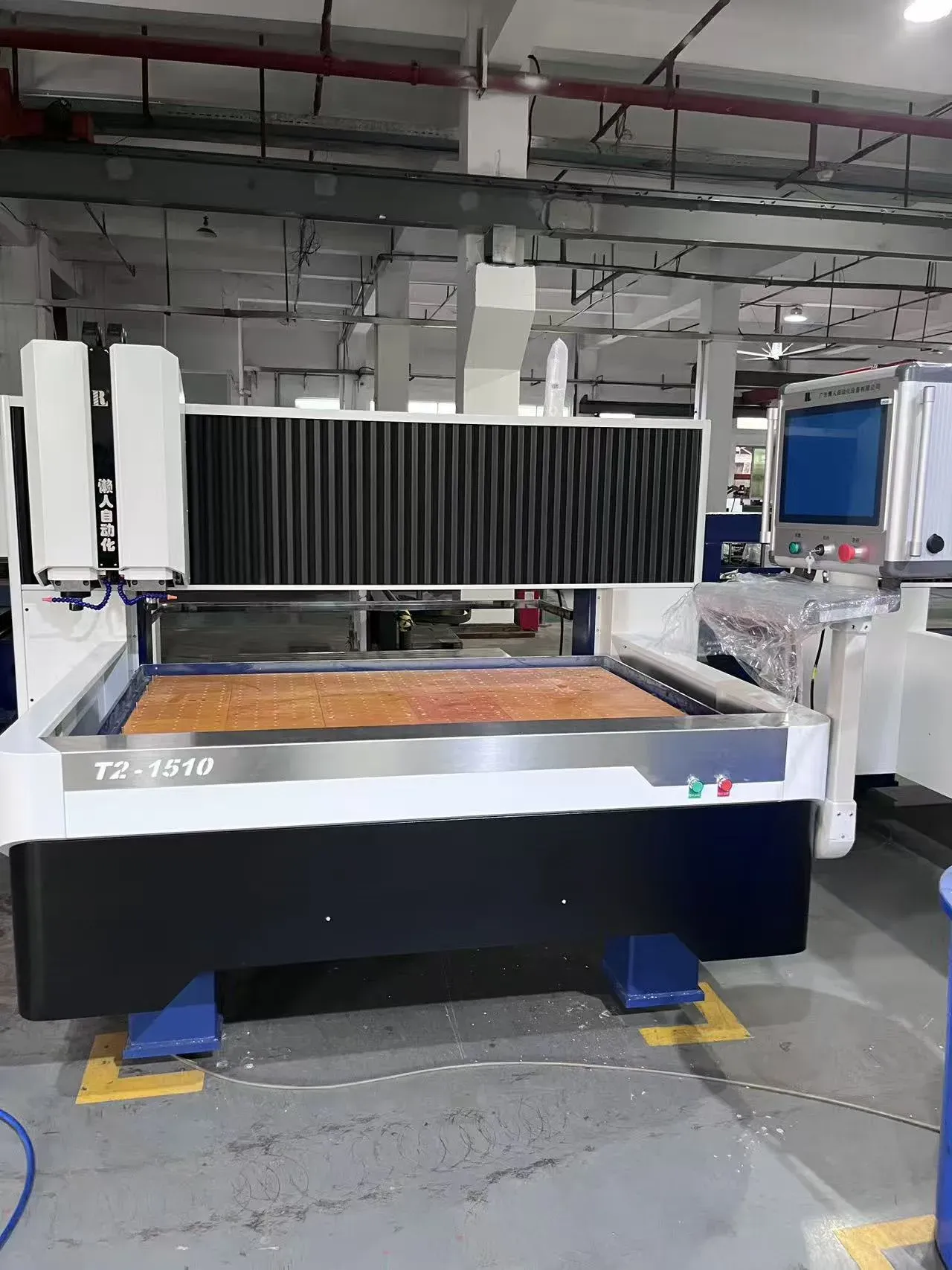
Locating the part. The worktable uses origin positioning blocks: the operator sets the part against fixed datum blocks, so position repeats from part to part without a custom fixture for every variant. Positioning is simple, and clamping efficiency stays high.
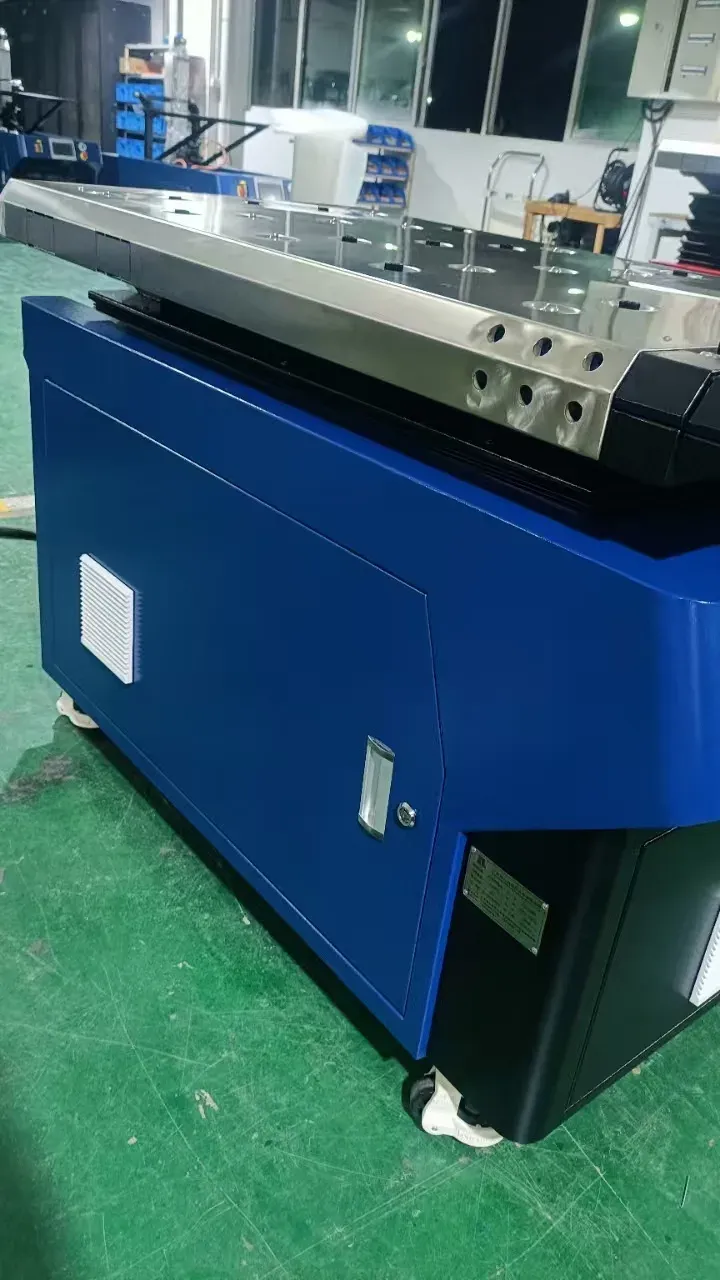
Supporting the shape. Under the part, a floating support structure adapts to the formed underside of the panel instead of assuming a flat surface. The shaped area is held steady while the spindle works, which addresses the deflection problem described above.
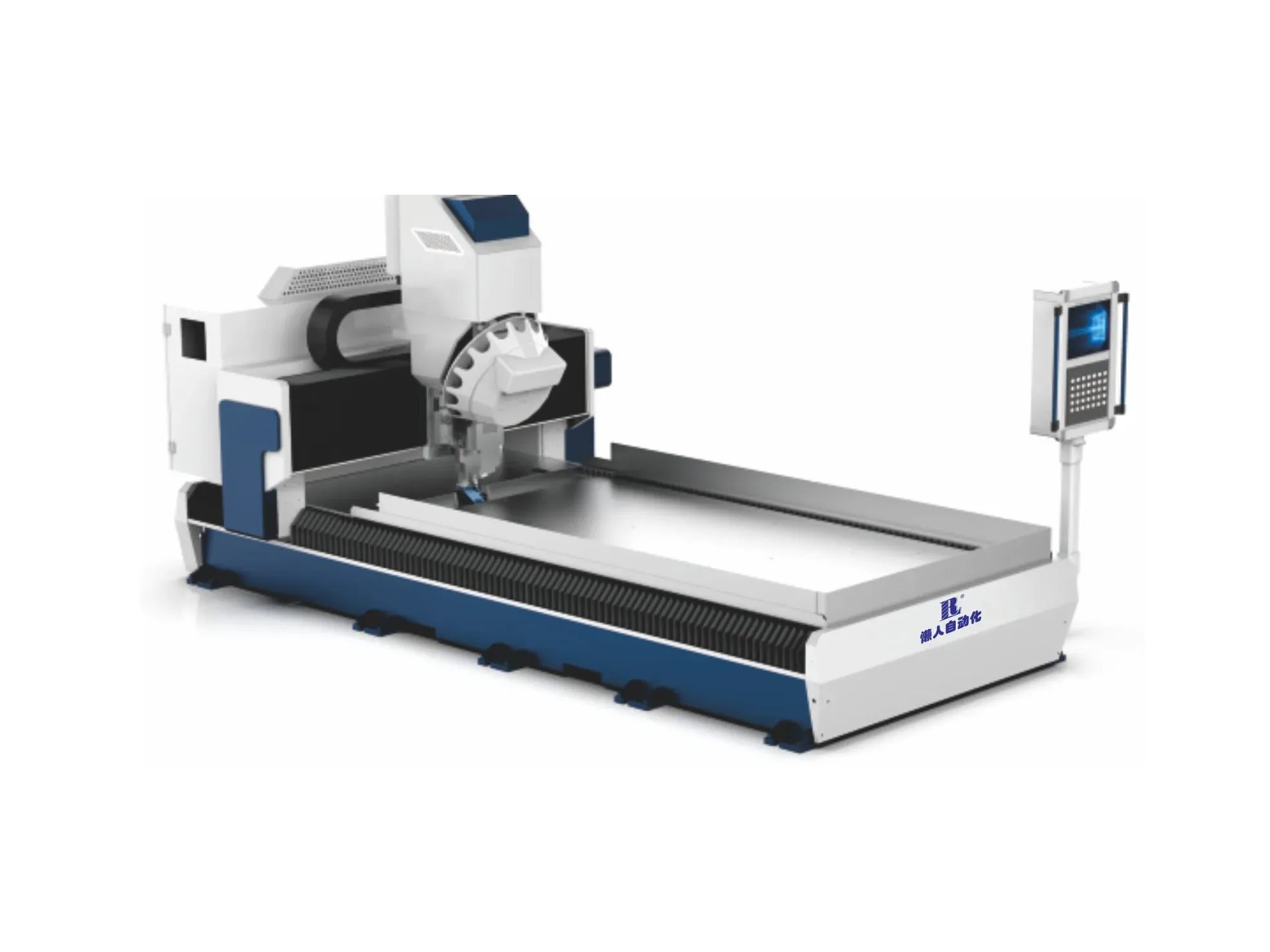
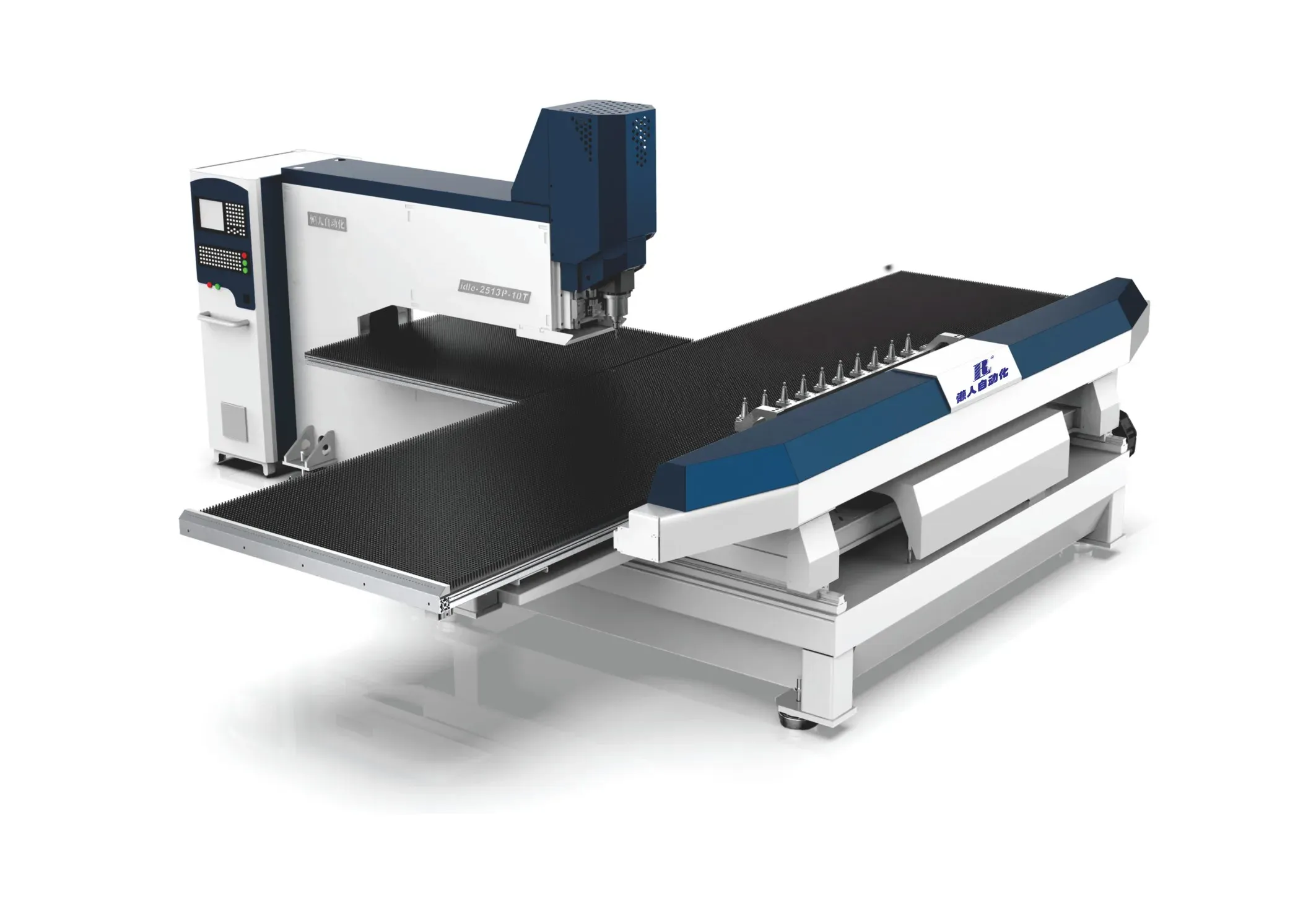
Changing tools quickly. A straight-array tool changer moves between tools in a direct line — a quick-change mode with a simple structure. Tools from 1.0 to 12.7 mm in diameter are held in ER25 collets, so the drilling, counterbore and tapping tools a part needs can be loaded together.
Running the cycle. The five-axis CNC system supports programming directly at the machine or offline, using standard G-code — the same program format most shops already know. The machine's rigid frame also allows the platform to integrate tapping and laser functions in one machine by configuration, for parts that need both.
Where this fits: enclosures, panels, brackets
Common examples are stamped or formed panels that need fastener holes after forming: enclosure walls and doors, control-cabinet mounting plates, hinges and brackets. Shops looking for a CNC tapping machine for electrical enclosures are usually describing this same job — cabinet parts that mix counterbores and tapped holes in repeating small batches, where one-setup processing pays back fastest.
For higher volumes, the machine can run unattended: by configuration with a robot and a material warehouse, loading and machining proceed without an operator at the table — the machine's route to fully automatic operation.
The two models: ZM1510 and ZM2513
Machining range — ZM1510: 1500 × 1000 mm; ZM2513: 2500 × 1300 mm. This envelope is the real difference between the two models: it decides the largest formed panel that fits on the table.
Shared specification — Z-axis travel 200 mm; tool diameter 1.0–12.7 mm in ER25 collets; spindle speed 0–12000 rpm; idle speed 0–40000 mm/min; machining feed 0–15000 mm/min; machining precision ±0.05/300 mm; repeat positioning accuracy ±0.03/300 mm; spindle power 7.5 kW; power capacity 20–30 kW.
In practice the choice comes down to part size: if the formed panel and its locating scheme fit inside 1500 × 1000 mm, the ZM1510 does the job; larger doors and long brackets move the decision to the ZM2513.
When this machine is not the answer
A counterbore and tapping machine for stamping parts fits when shaped parts repeat and hole consistency matters. It is not the right answer for every shop:
• Parts larger than the table: check the formed panel's full envelope against 1500 × 1000 or 2500 × 1300 mm before planning the process around one machine.
• Very low volume or one-off parts: the setup has to be earned back; occasional shaped parts may not justify it.
• Very thin sheet that needs strong threads: thread engagement in thin material is limited by physics, not by the machine; self-clinching fasteners may be the better joint.
• Laser integration needs confirmation: the tapping-plus-laser configuration exists on the platform, but it is a configuration to specify with the supplier, not a default.
FAQ
Why do formed parts need floating support? Because a formed underside is not flat. A floating support adapts to the shape and holds the panel steady under spindle force, where a flat fixture would contact only a few points and let the part deflect.
Can it do counterbore and tapping in one setup? Yes. The straight-array magazine holds drill, counterbore tool and tap together, and the CNC cycle changes between them — one setup, no transfer to a second station.
Do I have to program every part by hand? No. The five-axis control supports both online programming at the machine and offline programming, using standard G-code that any CAM post or existing program library can produce.
What accuracy can I expect? Machining precision is ±0.05/300 mm and repeat positioning accuracy is ±0.03/300 mm on both models — the repeatability figure is the one that matters for batches of shaped parts.
Can it run unattended? Yes, by configuration: with a robot for loading and a material warehouse, the machine is designed for fully automatic unmanned operation.
Which model should I choose? Start from the largest formed panel you run. If it fits within 1500 × 1000 mm, the ZM1510 covers it; beyond that, the ZM2513's 2500 × 1300 mm envelope is the match.
What to send for a recommendation
Send the part drawing (DXF or PDF), the material and thickness, the hole types — counterbore sizes and tap sizes — and the typical batch size. Our team will confirm whether the ZM1510 or ZM2513 fits the envelope, and how the part would be located and supported on the table — a scheme you can check directly against your drawings before committing.