Buying Guides
ZM or T? Which Counterbore and Tapping Machine Fits Your Parts — Stamped Panels or Flat Sheet
Flat sheet and stamped panels need different counterbore and tapping machines. Compare the T and ZM series by part shape, clamping and programming, and pick the one that fits your shop.
counterbore looks the same on a drawing whether the part is a flat cabinet door or a stamped enclosure panel with bumps, sinks and cut-outs. On the shop floor the two parts behave very differently, and that difference — not the hole — decides which machine to buy. Lazy Automation builds two series for this work: the T series for flat sheet, and the ZM series for stamped and formed parts. This article compares them by part shape, clamping, programming and daily operation, so you can match the machine to the parts you already produce.
The short answer: look at the part, not the hole
- Your parts are mostly flat sheet — cabinet doors, distribution-box panels, elevator door panels, flat chassis plates: the T series is built for that work.
- Your parts are mostly stamped or formed — panels with convex bumps, sinks, drawn shapes or cut-outs: the ZM series is built for that work.
- You run both, in separate batches: the deciding factor is which shape fills more of your week, and whether one machine can cover the other shape without slowing the line down. The table at the end of this article works through that case.
The T series: counterbore and tapping for flat sheet
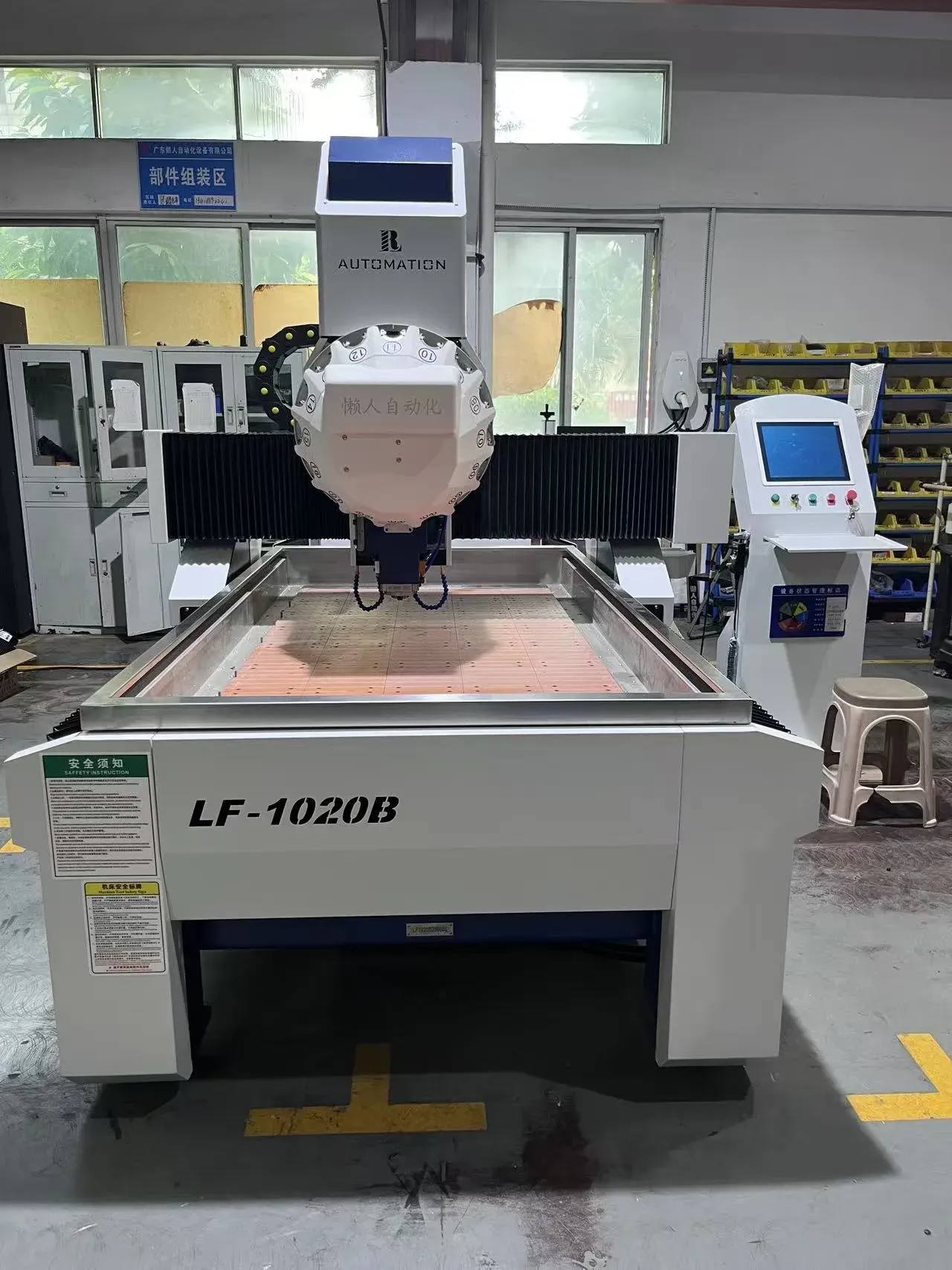
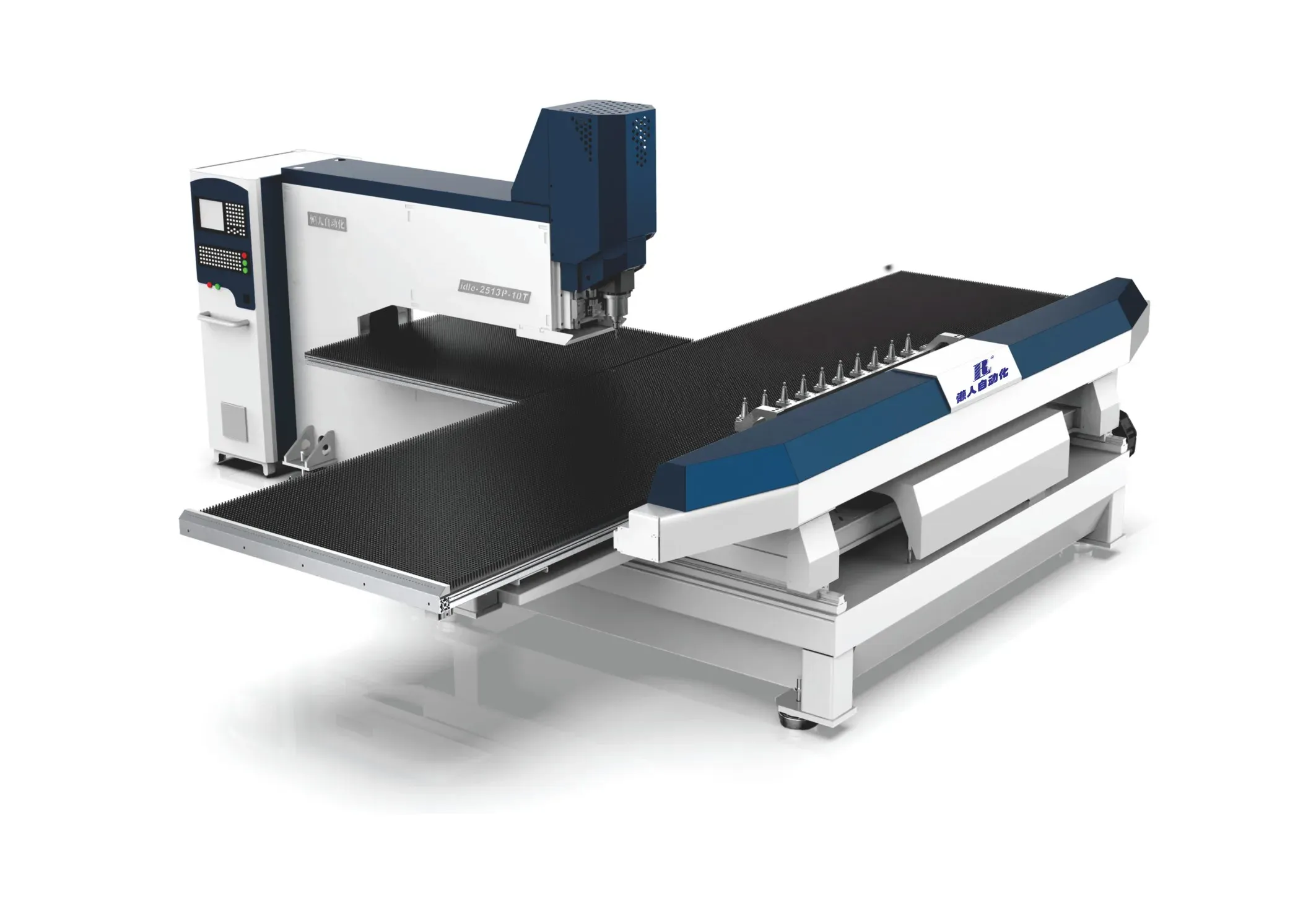
The T series is a multi-spindle CNC machine for counterbore (sinking hole) and tapping in the sheet metal industry. It also handles fixture-clamp non-metallic carving and milling. Six models cover machining ranges from 1000 x 800 mm to 1500 x 3000 mm:
Model | Machining range |
|---|---|
T2-1008 | 1000 x 800 mm |
T2-1510 | 1500 x 1000 mm |
T3-1512 | 1500 x 1200 mm |
TL-1020 | 1000 x 2000 mm |
TL-1325 | 1300 x 2500 mm |
TL-1530 | 1500 x 3000 mm |
All six models run up to 108 counterbores per minute, with two to three spindles, a maximum spindle speed of 3000 rpm, ER25 collets and 6 to 9 controlled axes. Z-axis travel is 200 mm, idle speed is 40,000 to 60,000 mm/min depending on model, and power supply capacity is 9 to 15 kV.A. Machine weight ranges from approximately 1400 kg to 4000 kg, which is worth checking against your floor and your lifting arrangements before you order.
Programming is the part that changes the working day most. DXF files are imported directly and the control generates the G-code, so the machine is not programmed by hand at the console. Hole positions come from the imported file rather than from an operator marking and moving between stations, which is how missed and wrong holes are addressed by the machine rather than by attention. Plate scratching is also reduced, because the plate is no longer handled between separate operations.
On a flat sheet, that combination — multi-spindle cutting, file-driven positions and a range matched to the panel — is what the T series is for. The machine assumes the sheet sits flat and stays flat.
The ZM series: counterbore and tapping for stamped and formed parts
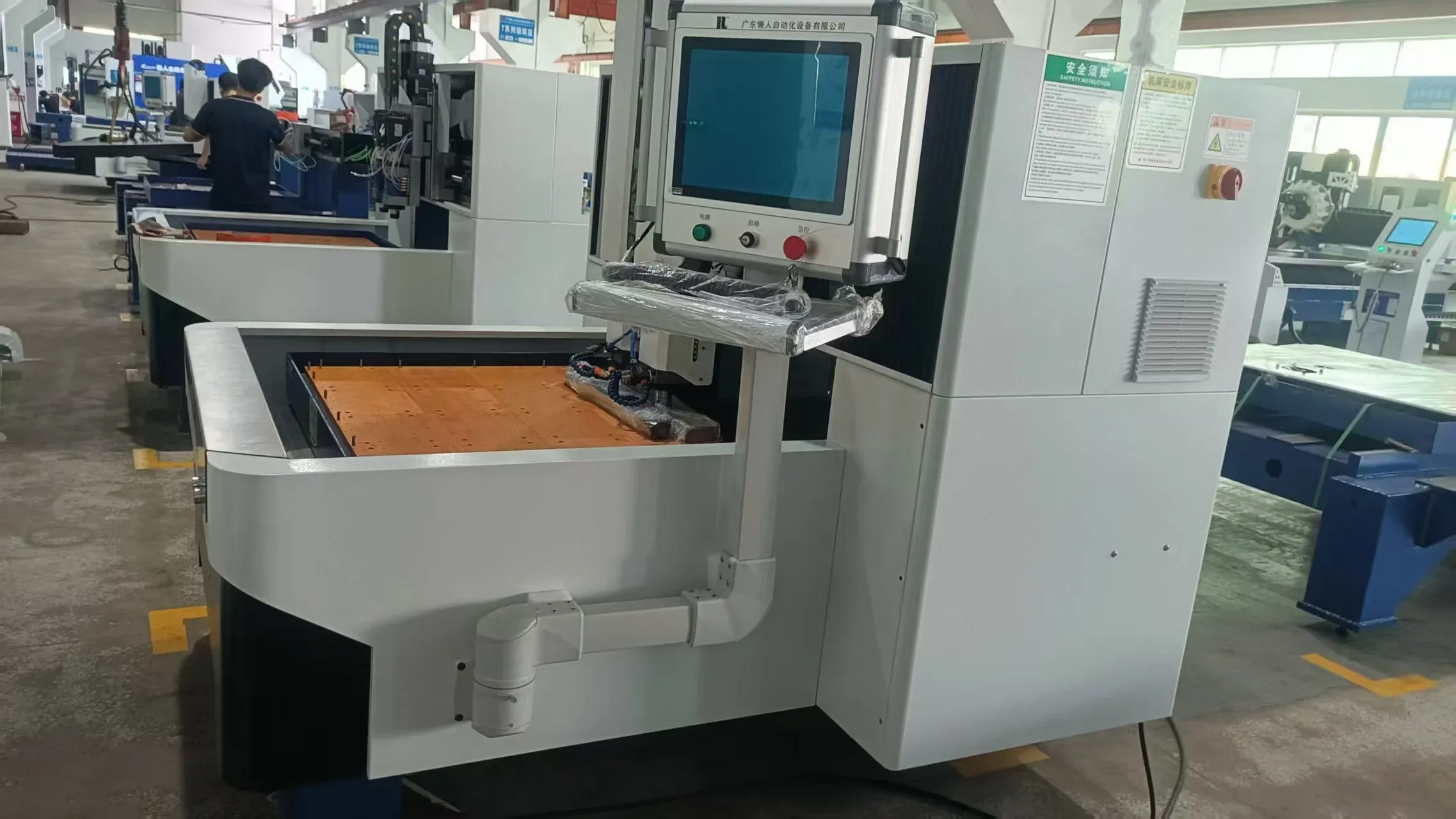
Stamped and formed sheet metal parts are hard to clamp, which is why counterbore and tapping on shaped parts is usually done by hand and comes back inconsistent. The ZM series — ZM1510 and ZM2513 — is built for exactly that work: counterbore and tapping on panels with convex bumps, sinks and cut-outs, where manual work struggles to keep depth and position consistent.
The difference is in how the part is held. The ZM series uses a floating support structure to hold formed panels flat, carrying the bottom of the part so shaped panels sit flat through the operation. Parts are positioned with an origin positioning block for quick clamping. That support, not the spindle, is the feature that makes the machine fit formed parts: a flat vacuum table or a plain clamp holds a flat sheet well, but a stamped panel touches a flat table only at its high points, and every hole drilled from that position inherits the tilt.
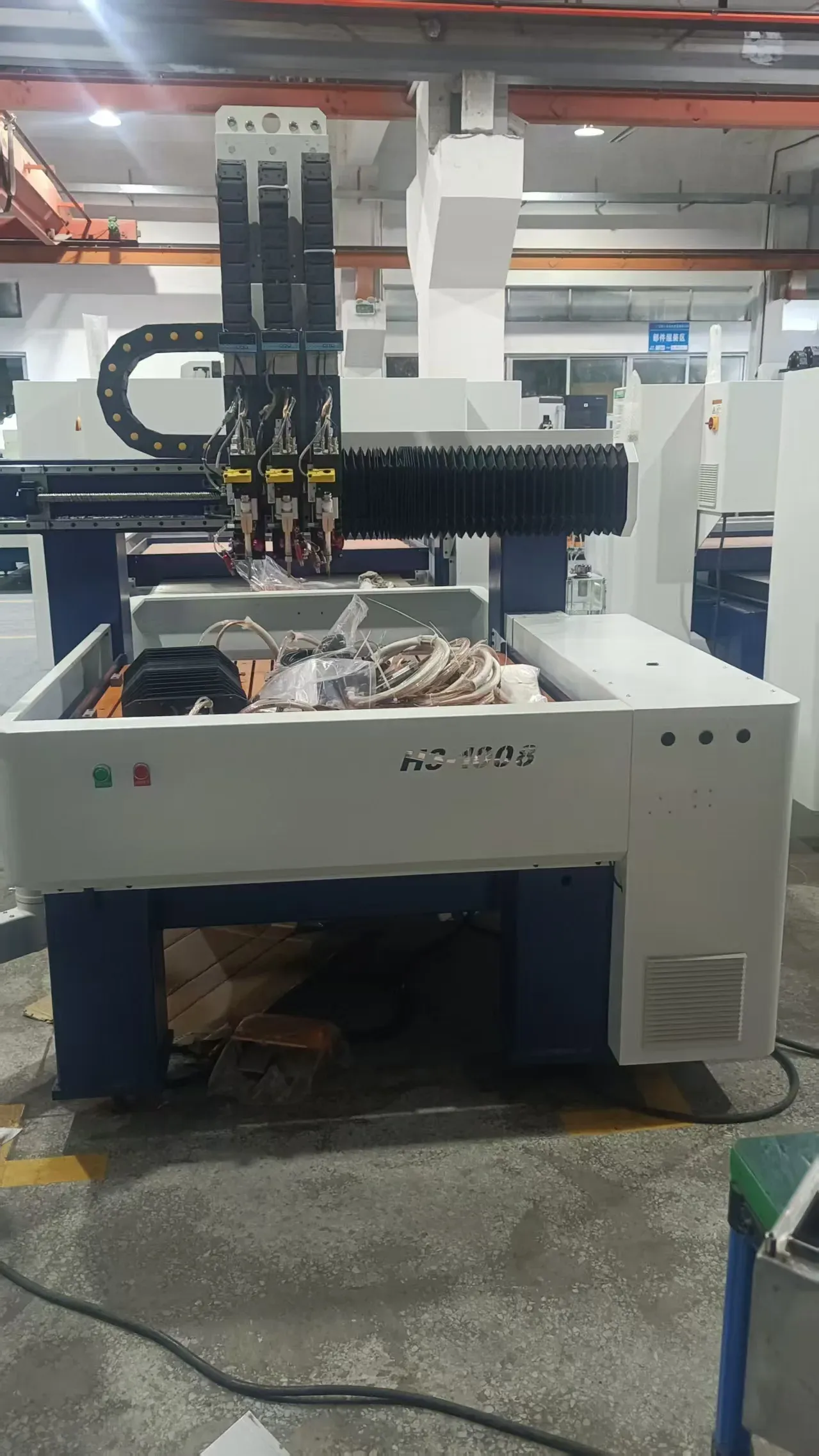
Control is a five-axis system that supports both online and offline programming with standard G-code. Tool changes use a straight-array magazine — a simple structure built for speed. The machine can also integrate tapping and laser functions, and with a robot and material warehouse it supports fully automatic unmanned operation.
Note what is not published for the ZM series: the product page and catalog do not list machining ranges, spindle speeds or table sizes for these two models. The right way to size a ZM machine is to send the part drawing or sample photos, the material and thickness, and the operations required; the factory confirms the model (ZM1510 or ZM2513) and the support and tooling configuration from the part itself.
ZM vs T: the comparison that matters
Decision factor | Flat sheet → T series | Stamped / formed part → ZM series |
|---|---|---|
Part shape | Flat panels up to 1500 x 3000 mm | Panels with bumps, sinks, drawn shapes, cut-outs |
How the part is held | Flat table; the sheet sits flat by itself | Floating support carries the shaped bottom flat; origin positioning block for quick clamping |
What sets hole position | DXF import, control generates G-code | Five-axis control, online + offline programming, standard G-code |
Tool change | Multi-spindle (2–3 spindles), up to 108 counterbores/min | Straight-array magazine |
Speed figures published | Yes — 3000 rpm max, 200 mm Z travel, 40,000–60,000 mm/min idle speed | Not published — confirm from the part drawing |
Extra functions | Fixture-clamp non-metallic carving and milling | Tapping and laser functions can be integrated; robot + material warehouse for unmanned operation |
Models | 6 — T2-1008, T2-1510, T3-1512, TL-1020, TL-1325, TL-1530 | 2 — ZM1510, ZM2513 |
The table makes the trade-off plain. The T series wins on flat sheet because its speed and range figures are published and its programming removes hand marking. The ZM series wins on formed parts because it solves the clamping problem first — depth and position stay consistent only if the shaped panel sits flat through the cut.
What to check before you choose
1. What share of your parts is actually formed?
Count a real week of parts, not a feeling. If formed panels are a small share, a T series machine plus manual work on the shaped parts may be the cheaper route. If formed panels fill most of the week, manual counterbore work is where your inconsistency and rework live, and that is the work the ZM series replaces.
2. Can the part sit flat without support?
Lay a sample part on a flat table. If it rocks, or touches only at a few high points, flat-sheet clamping will not hold it square to the spindle. That single check separates T work from ZM work more reliably than any specification sheet.
3. Where do the hole positions come from?
If your holes already live in a DXF file, the T series turns that file into G-code without hand programming. If your parts are stamped and the hole pattern is set from the formed shape, confirm with the factory how the ZM program is built — online or offline — from your drawing before you decide.
4. What does the floor need to carry?
T series machines weigh approximately 1400 kg to 4000 kg depending on model. Check the floor and the lifting arrangements for the largest model you are considering. For a ZM machine, the support and tooling configuration is confirmed from the part drawing, so send the drawing early and let the configuration answer the floor question.
5. Is the work growing toward automation?
Both series can grow, in different directions. The ZM series can add a robot and material warehouse for unmanned operation. The T series gains its speed from multi-spindle cutting and file-driven programming, which suits a flat-sheet line running dense hole patterns in batches.
FAQ
Can one machine cover both flat sheet and stamped parts?
It can cover one shape well and the other badly. A T series machine will cut holes in a stamped panel, but without floating support the panel will not sit flat, and depth and position will drift. A ZM series machine will cut holes in a flat sheet, but you are paying for a support structure the sheet does not need. If you run both shapes, buy for the shape that fills more of your week, and keep the other shape on its current route until its volume justifies its own machine.
We already own a T series machine. When is a ZM machine the next buy?
When the formed parts stop being an exception. Signs: operators spend more time clamping and checking stamped panels than cutting them, counterbore depth varies across a batch of the same part, or rework on formed panels is growing while flat-sheet work stays clean.
Why are there no ZM speed or range figures in this article?
They are not published on the product page or in the catalog. The ZM machine is configured from the part — its shape, material, thickness and the operations required — so the factory confirms the model and the support and tooling configuration from the drawing or sample photos. Sending the drawing first gives a more accurate answer than any table could.
Does the T series only do counterbore and tapping?
No. It also handles fixture-clamp non-metallic carving and milling, and the ZM series can integrate tapping and laser functions. The choice is still driven by part shape first; the extra functions decide the configuration, not the series.
What should we send for a quote?
For either series, the part drawing or sample photos, the material and thickness, and the operations required. For a ZM machine, add photos showing the formed shape — the bumps, sinks and cut-outs — because the support configuration is built around them.
Get a quote
Send your part drawings and hole pattern for a quote: yuanrongbing8@gmail.com, +86 139 0269 5283. Tell us whether your parts are flat sheet or stamped and formed, and which shape fills more of your week — that is the detail that decides between the T and ZM series.