Buying Guides
What to Check Before Buying a Gantry Milling Machine for Large Plates
A practical look at the GL gantry series: how envelope, bed structure and tool storage decide what works on large steel plates and frames.
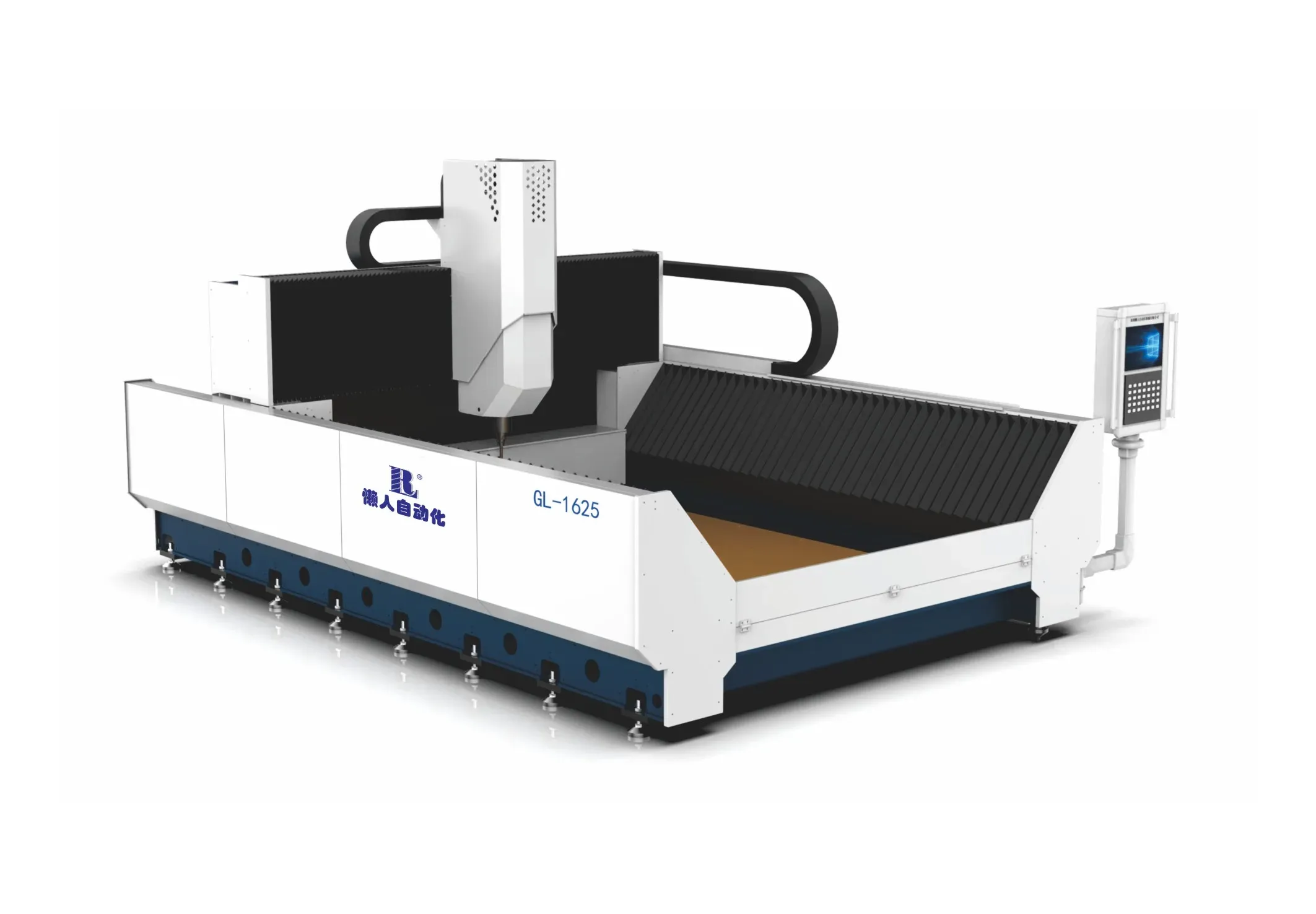
Past a certain plate size, moving the workpiece stops making sense. The GL series gantry milling machine keeps the plate still and travels the spindle over it instead, combining drilling, tapping and milling in one high-speed machining center. That change of architecture, rather than any single specification, is what decides whether the machine suits the parts you run.
Size the Machine from the Plate That Will Run on It
The series runs four models: GL-1625 at 1600 x 2500 mm, GL-2030 at 2000 x 3000 mm, GL-2040 at 2000 x 4000 mm and GL-2060 at 2000 x 6000 mm. Z-axis travel is 500 mm on the first two models and 800 mm on the GL-2040 and GL-2060, which is the figure that decides whether a tall frame or fixture clears as well as a flat plate.
The envelope is only half the sizing question: the machine itself measures from 4000 x 3300 x 2500 mm up to 7800 x 3700 x 2800 mm depending on model, so plan the bay and the lifting arrangements before you plan the purchase. Start from the largest plate you quote for: the GL-1625 is the entry point, the 2000 mm wide models take wider plates, and the GL-2060 reaches 6000 mm of plate length.
The Bed and Rail Design: What It Is Worth Paying For
The bed is a steel plate honeycomb weld — a heavy machine bed rather than a light frame — and the machine uses dual drive with four guide rails. The manufacturer lists high rigidity, fast response and stable processing as the result of that structure. High traverse speed is only useful if the structure holds position while it moves: on a machine this size, the bed's mass and the rail arrangement set the accuracy that 60 000 mm/min rapids can deliver. Dual drive means both sides of the gantry are driven; four guide rails spread the load, which is what keeps the gantry square under acceleration.
Speed, Power and Tool Storage: How They Fit Together
The spindle runs up to 12000 r/min on a 7.5 kW or 11 kW main axis, and idle speed reaches 60 000 mm/min, which the manufacturer contrasts with traditional gantry machines that move more slowly. Drilling, tapping and milling share that spindle, so the configuration choices deserve attention early: an optional BT40 or BT50 main axis, and an optional tool magazine of 16, 21 or 24 stations. A larger magazine holds more of a mixed program's tools on board, so fewer tools have to be loaded manually between jobs; a smaller magazine suits a shop with a narrow, repetitive tool set.
For a mixed operation — drill, then tap, then mill the same pattern — the magazine matters more than the top spindle speed, because the tool change happens inside the cycle instead of between jobs.
One Setup Instead of Three: That Is Where the Payback Sits
Drilling, tapping and milling in a single setup removes the transfer between machines, and it is the transfer that costs both time and positioning accuracy, because each move from one table to another re-introduces a clamping error. The GL series is used in the sheet metal industry and the machining industry, for drilling, tapping and milling on equipment beds and frames, and it handles aluminum plate, steel plate and profiles. Six-axis control with an automatic tool change magazine runs the sequence, and online and offline programming are both supported. For equipment beds and frames, the payback is one setup, one datum, no second clamping operation.
Before You Specify: Floor, Power and Services
Three practical limits are worth confirming before the model is fixed. Machine weight runs from 12 000 kg to 30 000 kg depending on model, which makes this a foundation and handling question rather than a transport detail. Power capacity is 25 kW on the three smaller models and 33 kW on the GL-2060. And because the envelope grows with the model, the largest machine needs floor space for a 7800 x 3700 mm base. It is easier to confirm those three against the building drawing at the quotation stage than to work around them later. Once they are settled, what remains to decide is tooling rather than the machine itself.
What to Send Before You Specify
Send the plate size, material, thickness and the operations required — drilling, tapping, milling or a mix of all three — and our team will confirm the model from GL-1625 to GL-2060 and the axis and tooling configuration, so you have a recommendation you can compare against your own parts.